Apple May Adopt Hybrid OLED Technology Allowing for Thinner iPads by 2024 - MacRumors
Skip to Content

Apple May Adopt Hybrid OLED Technology Allowing for Thinner iPads by 2024

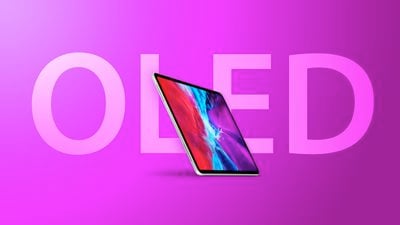
Apple could adopt a "hybrid" OLED technology in iPads by 2024 that could allow for slimmer devices while lowering production costs, according to a new report out today (via DigiTimes).
OLED iPad Pro Feature
By combining rigid ‌OLED‌ glass substrates with flexible ‌OLED‌ thin-film encapsulation, the hybrid ‌OLED‌ technology is said to make ‌OLED‌ panels thinner than rigid ‌OLED‌ panels. The process also reportedly incurs lower production costs than flexible ‌OLED‌ panels because it doesn't require a backlighting layer.

Reference to the hybrid ‌OLED‌ technology first appeared in an August report from Korean outlet The Elec, which also said Apple could adopt it in iPads by 2024. However, that report claimed Apple preferred hybrid ‌OLED‌ over the flexible ‌OLED‌ panels it uses in its iPhone models because the flexible panels have a tendency to visibly "crumple," especially at larger screen sizes.

The return of the rumor appears in the context of a report claiming Apple has brought another manufacturing partner into its supply chain that will likely be involved in upcoming refreshes to the 12.9-inch iPad Pro and MacBook Pro.

Taiwan Surface Mounting Technology (Taiwan SMT) will undertake SMT process for mini LED backlighting of 12.9-inch iPad Pro and MacBook Pro, becoming an Apple supply chain maker for the first time, according to industry sources.

The report claims that Apple has contributed financially to Taiwan SMT's efforts to expand its production capacity, with some equipment dedicated to the SMT process for mini-LED backlighting, which is more difficult to achieve than standard LED backlighting since the former involves the use of more mini-LED chips.

Currently the only Apple devices that use mini-LED are the 14-inch and 16-inch ‌MacBook Pro‌ and the 12.9-inch ‌iPad Pro‌. All three devices are expected to be refreshed with M2 chips before the end of the year.

Apple is expected to continue to use the mini-LED backlighting technology until the hybrid ‌OLED‌ technology has matured and is ready for commercialization, which is unlikely to happen before 2024, according to the report.
Related Roundup: iPad Pro
Buyer's Guide: iPad Pro (Neutral)

Popular Stories

Oled iPads and MackBook Pro Notch

5 Apple Products to Get OLED Displays

Thursday August 20, 2026 6:50 am PDT by
Apple plans to upgrade several iPads and Macs with OLED displays over the next three years, according to a new DigiTimes report. The following five devices will receive OLED displays between 2026 and 2029, according to the Taiwanese publication's industry sources:iPad mini: 2026 MacBook Pro: Late 2026 or early 2027 iPad Air: 2027 iMac: 2028 or 2029 MacBook Air: 2028 or 2029OLED...
iPhone Handoff iOS 27 Feature

T-Mobile to Charge $5 a Month for iOS 27 iPhone Handoff

Thursday September 10, 2026 3:58 pm PDT by
T-Mobile will charge customers $5 per month to use iPhone Handoff, an e-SIM feature that allows the same phone number to be used on two separate iPhones. iPhone Handoff requires carrier support, and at launch, only T-Mobile users in the U.S. and Deutsche Telekom users in Germany will be able to use it. T-Mobile says customers can use their number across two compatible iPhone models and...
iphone duo

IMAX Reacts to iPhone Duo's 1:1.4 Aspect Ratio Displays

Friday September 11, 2026 4:42 am PDT by
Production theater company IMAX has responded in a mixed way to Apple's embrace of a 1:1.4 aspect ratio on the iPhone Duo's inner and outer displays. The boxier ratio happens to be very close to the classic "full-frame" IMAX 1.43:1 aspect ratio, which comes from the geometry of the company's original 15-perforation/70mm film system. In response to an X post from someone wondering if we'll see...

Top Rated Comments

51 months ago
The iPad is thin enough. Replace the saved space with more battery.
Score: 22 Votes (Like | Disagree)
DMG35 Avatar
51 months ago
The iPad is thin enough. Give me a landscape camera and then we can talk.
Score: 14 Votes (Like | Disagree)
kiranmk2 Avatar
51 months ago

By combining rigid OLED glass substrates with flexible OLED thin-film encapsulation, the hybrid OLED technology is said to make OLED panels thinner than rigid OLED panels. The process also reportedly incurs lower production costs than flexible OLED panels because it doesn't require a backlighting layer.
Um, no OLED needs a backlighting layer as it is self-emissive...
Score: 11 Votes (Like | Disagree)
zilchfox Avatar
51 months ago
I don’t think the iPad needs to be any thinner, however more space for battery would be welcome.
Score: 8 Votes (Like | Disagree)
RickDEGH Avatar
51 months ago
Thinner iPads, wanted no one.
Score: 7 Votes (Like | Disagree)
51 months ago

So we'll be back to bendgate. Just Wow!
The iPad is already dangerously thin. Take an iPad Air 5 and lightly press on the back of it. You’ll see the screen deform.

The chassis should be strengthened before we get any thinner.
Score: 6 Votes (Like | Disagree)